
First-time buyers of cars and sport utility vehicles (SUVs) have made a comeback, shows last year's data from top passenger vehicle (PV) makers. If the trend persists, it may move the needle on the overall car penetration ratio. India's car penetration ratio is 32 per 1,000 people - one of the lowest, compared to mature car markets like the US and Europe.

The share of first-time luxury customers in BMW's portfolio has risen sharply -- from around 43 per cent in 2024 to nearly 49 per cent in 2025. In some models, the figure is even higher.

Skoda India is focusing on cleaner fuel options, including CNG and EVs, while compact SUV Kylaq drives volumes, expands first-time buyers and strengthens the brand in India's competitive market

The demand from second-time car buyers outstrips the demand from those seeking to upgrade themselves from two-wheelers. Tata Motors' city dealers say about 60 per cent of all Nano buyers are those who already own a car and the rest 40 per cent are those who either own a two-wheeler or have never owned a vehicle earlier.

Maruti Suzuki sold more cars than ever before, earned more money, and saw many first-time buyers choosing small cars again.
India's passenger vehicle (PV) industry is projected to experience moderated growth in FY27, following a strong rebound in H2FY26, primarily due to the high base effect, absorbed pent-up demand, and the lingering impact of geopolitical tensions in West Asia.

It is after seven years that a sedan has claimed the top spot -- Dzire had last achieved the No.1 position in 2018.

With its Battery-as-a-Service (BaaS) model Tata Motors just redrew the EV battle lines, says Rajesh Karkera/Rediff.com

The country's biggest carmaker, Maruti Suzuki India, has raised concerns about the continuing slide in small car sales.

In absolute terms, both types of cars must cut emissions by about 28-29 g/km. But in percentage terms, the lighter 900-kg car must reduce emissions by 27 per cent, while the 1,500-kg car needs a 22 per cent cut. And the target becomes progressively stringent for both -- but, once again, the tightening is sharper for the 900-kg car than for the 1500-kg car.

Despite a 2.8 per cent fall in 2025 volumes, Mercedes-Benz India reported its best-ever revenue and profitability, led by top-end models, AMG growth and higher BEV mix.

While GST on ICE vehicles was brought down significantly, for electric cars it remained at 5 per cent.

The New Tata Punch is a fantastic deal for first-time buyers. You get SUV capabilities and premium features like Clima Touch Automatic Temperature Control, an integrated air purifier, and rain-sensing wipers, says Rajesh Karkera.

Top carmakers led by Maruti Suzuki, Mahindra & Mahindra, Tata Motors Passenger Vehicles and Kia India on Saturday reported record sales in the domestic market riding on festive demand boosted by GST rate cut. Other manufacturers such as Skoda Auto India and Toyota Kirloskar Motor also posted impressive growth in sales in October.

The models from Hyundai and Maruti, which might go on sale in October 2018 and February 2019, respectively, are set to revive a segment that had lost sheen to the compact SUV segment, lately

Even as good days continue to elude the economy at large, they seem to have arrived for Maruti Suzuki.

77 per cent of all transactions in the January-March 2025 period took place digitally, indicating continued preference for online car purchases.

Since the Indian government reduced GST on small cars on September 22, the small car segment's share in Maruti's overall sales has risen to more than 25 per cent, up from 16.6 per cent earlier in FY26.
Priced at Rs 25-26 lakh (Rs 2.5-2.6 million) and launched a year ago, more than 2,500 units of the A and B Class are running on Indian roads.

Maruti Suzuki will introduce eight SUVs over the next five years taking its overall model range to 28 as it aims to regain 50 per cent market share in the domestic passenger vehicle segment, Suzuki Motor Corporation Representative Director and President Toshihiro Suzuki said on Wednesday.

Festivals also contribute to the rise in overall automobile retail sales, says dealers association.
The four-wheeler appears costlier than it is.

Major Indian carmakers are preparing for sluggish domestic PV sales growth of just 1-2 per cent in FY26.

Tata Motors on Friday said it will cut passenger vehicle prices ranging between Rs 65,000 and Rs 1.45 lakh effective September 22 to pass on the full benefit of GST reduction to customers. The Mumbai-based auto major said that its small car Tiago will see a price drop of Rs 75,000, Tigor Rs 80,000, and Altroz Rs 1.10 lakh.

The rise of startups and a thriving entrepreneurial culture in Tier-II and Tier-III cities is contributing to the increasing sales of high-end cars.

For the first time in history, the luxury car market is poised to cross the sales mark of 50,000 units in 2024, with Mercedes leading the way

The growing rift between MSIL and rival automakers has complicated the government's efforts to finalise the CAFE norms.
The update to the Tata Nano makes it a more appealing package.

The economy segment of India's car market is unlikely to revive soon term as inflation and prices prompt buyers to defer purchases. The share of entry-level cars in the passenger vehicle market dropped to the lowest in seven years at the end of the Financial Year 2021-22 (FY22). A recovery in the segment will be largely driven by the overall economic growth, improvement in income levels, and easing of semiconductor shortage, say carmakers and analysts.
The hatch competes with cars such as Maruti Alto and Hyundai i10.

Just like the Zest and Bolt, the Tata Tiago has also got the ride handling balance spot-on. The suspension has a mature set-up and does a fine job on the pothole ridden Mumbai roads

Dealerships, too, are going all out to roll out the red carpet for women.

'Online aggregators offer discounts of 70% to 75%.' 'At a car dealership, the discount is usually in the range of 30% to 35%.'

'The Triber, which sits between the Kwid and the Duster in the Renault portfolio, is an affordable option for those who have their sights set on a multipurpose vehicle and want to get something different from, say, a Maruti Suzuki Ertiga,' says Pavan Lall.
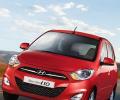
Better roads, more disposable income helps boost demand.

Mercedes-Benz India is looking at electric entry-level models to attract first-time luxury car buyers, as it sets eyes on another double-digit growth this year, its managing director and CEO Santosh Iyer said on Monday. The company, which launched all-electric entry SUV EQA 250 at an introductory price of Rs 66 lakh, has also introduced the new EQB 350 SUV (5-seater) priced at Rs 77.5 lakh and EQB 250+ SUV (7-seater) tagged at Rs 70.90 lakh (prices all India ex-showroom). It will also launch the EQS Maybach SUV and electrified G-Class models in India later this year.

The strong domestic growth for new vehicle sales during 2008-12, which witnessed a compounded annual growth rate of 14 per cent, led to an increased inventory of used cars, thanks to trade-ins.

Every three minutes, in some corner of the country, two Altos are being sold.
The entry-level car, under the popular Datsun brand, is aimed at tapping the first-time car buyers.

The meltdown in Dalal Street that wiped out investor wealth to the tune of 44 trillion in 2025 also seems to be having a ripple effect on the country's vibrant automobile retail sales.
 © 2026 Rediff.com - Advertise with us - Disclaimer - Privacy Policy - Sitemap - Feedback - About us - Terms of use - Grievances